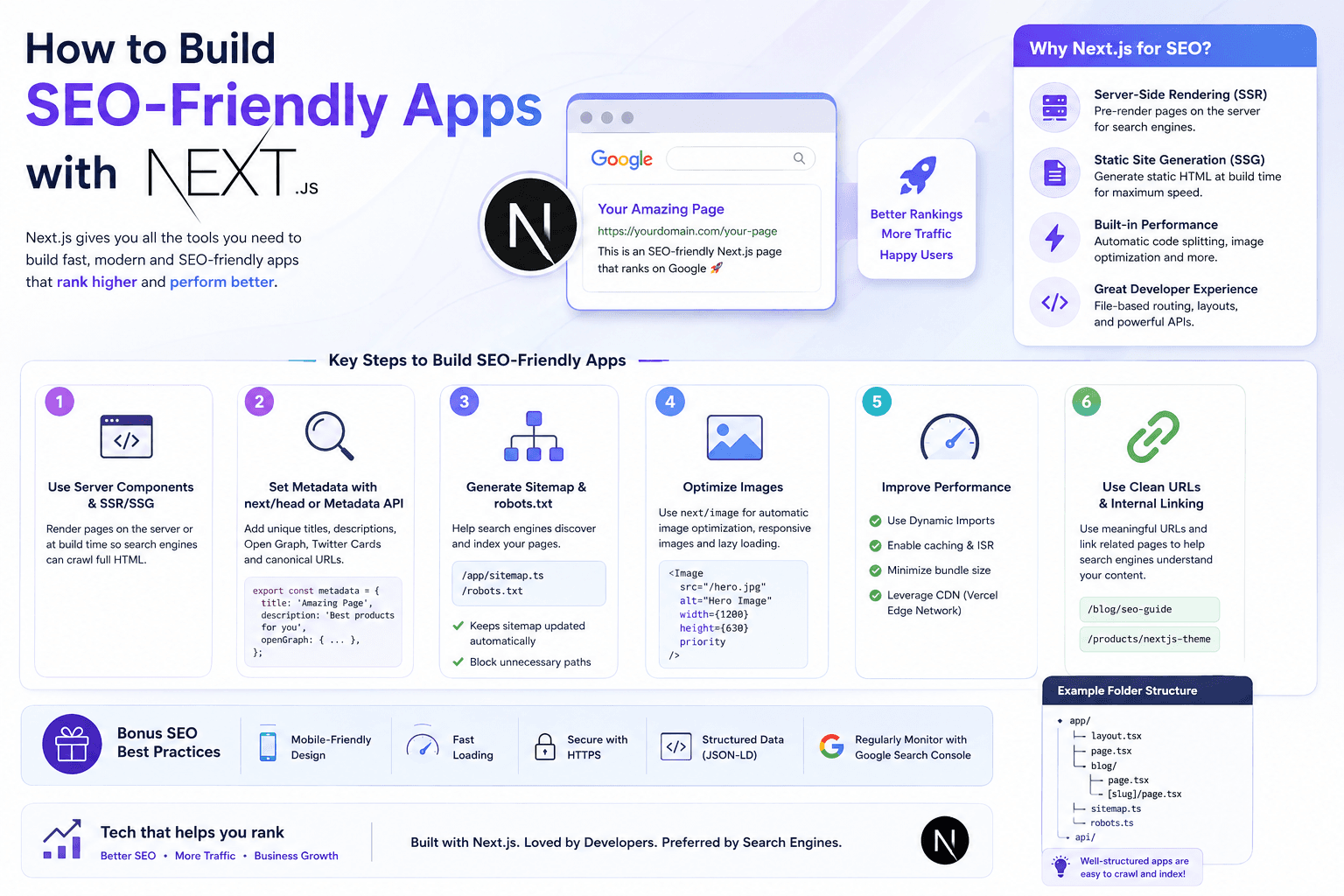
I am Sajan Acharya, a Senior Software Engineer based in Kathmandu. When founders ask me how to build SEO-friendly apps with Next.js, they rarely need another list of meta tags. They need a delivery sequence: decide what must be crawlable, pick a rendering strategy that matches that content, then protect performance so rankings do not collapse after launch. This guide is the checklist I use on real products—marketing sites, hybrid SaaS shells, and content-heavy portals that must earn organic traffic while still feeling like modern React applications.
Next.js helps because the framework can send HTML that bots and users can read on first request. React alone, shipped as a client-only SPA, often hides the words that matter until JavaScript finishes. That delay costs discovery. Search systems and social crawlers are more reliable when the title, intro, and primary facts exist in the document without a hydration lottery. If you want hands-on help applying these patterns, my Next.js developer services page outlines how I scope architecture, SEO foundations, and production delivery.
Start with crawlable information architecture
SEO begins before the first component. Map the URLs that should rank: home, service pages, blog posts, case studies, and any comparison or how-to content you plan to own. Keep URLs stable, readable, and nested in a way that mirrors how people search. Avoid query-string-only content for pages you want indexed. Prefer static path segments with clear titles over opaque IDs when the page is public. Write a short spreadsheet of slug, primary intent, and target query before anyone opens a pull request—that artifact prevents accidental renames later.
In the App Router, that map becomes a folder tree. Shared chrome lives in layouts. Unique titles and descriptions live in metadata for each route. Canonical URLs should point at the preferred host and path so duplicate parameters do not dilute signals. I also plan internal linking early—hub pages that connect related guides—so crawlers discover depth without relying on a sitemap alone. Treat navigation and in-content links as first-class SEO infrastructure, not decoration added after copy is frozen.
Choose rendering that matches SEO intent
Public marketing and article pages should ship meaningful HTML without waiting on the browser. Static generation or server rendering with cache where content is shared across users. Personalized dashboards can stay private and client-heavy; they are usually not the ranking surface. Mixing modes in one app is normal. The mistake is defaulting everything to client components and hoping a headless CMS feed will somehow appear in the initial document. When a page must rank, ask one question in review: can a text-only browser still understand the offer?
Streaming helps perceived performance, but you still need the primary headline, intro, and key facts in early HTML. Images need width, height, and modern formats so Largest Contentful Paint stays healthy. Fonts should not block text. Third-party scripts belong behind consent and load strategies that protect Interaction to Next Paint. Ranking is not only keywords—Core Web Vitals are part of how modern search evaluates experience. I budget third-party weight the same way I budget features: if it is not essential for conversion, it does not load on the first paint path.
- Define indexable routes and stable URL patterns before coding UI chrome
- Prefer server-first HTML for public pages; reserve client components for interaction
- Ship unique metadata, Open Graph tags, and canonicals per route
- Generate XML sitemaps and keep robots.txt aligned with what should be crawled
- Budget images, fonts, and third-party scripts against Core Web Vitals
- Add structured data only when it matches visible page content accurately
Metadata, sitemaps, and structured data without fluff
Every public page needs a unique title and meta description that match the H1 and the promise of the content. In App Router, use the metadata API or generateMetadata for dynamic posts. Do not template one description across fifty URLs. For blogs and case studies, include published dates you will actually maintain. Sitemaps should list only 200-level canonical URLs; remove drafts and thin duplicates. Preview environments should be blocked from indexing so staging copies never compete with production.
Structured data is useful when it clarifies article, FAQ, or product facts already visible on the page. Fake rich results invite manual review risk. I keep JSON-LD tight and validated. Breadcrumb markup should match visible navigation. If you are still deciding whether Next.js is the right production bet for your stack, read how to choose Next.js for production apps before investing in a large content migration that assumes the wrong rendering model.
Content quality still wins after the framework work
Technical SEO opens the door; useful writing keeps it open. Write for a specific search intent—how-to, comparison, or problem-solution—and answer it completely. Use clear H2 sections, one focused list where a checklist helps, and internal links to related services or deeper guides. Thin pages that repeat homepage copy under ten different URLs waste crawl budget. From Kathmandu I collaborate with remote teams across time zones; the same SEO rules apply whether your audience is local or global: clarity, crawlability, and speed.
Teams already on Pages Router should not freeze SEO improvements while debating a rewrite. You can improve metadata and rendering on the current stack, then migrate high-value routes carefully. I documented a practical sequencing approach in how to migrate from Pages Router to App Router. Pair that with honest measurement: Search Console coverage, CWV field data, and conversion on the pages you care about. A beautiful App Router migration that drops indexed URLs is not a win.
Ship, measure, and tighten
After launch, watch indexation, not vanity traffic charts alone. Fix soft 404s, redirect chains, and accidental noindex flags. Re-test Lighthouse on key templates after each major dependency bump. When content teams publish weekly, automate sitemap updates and preview environments so drafts never leak as indexed stubs. Schedule a monthly SEO hygiene pass: broken internal links, orphan pages, and templates that regressed on mobile LCP after a design change.
If you need a Senior Developer to audit an existing Next.js app or build a greenfield SEO-friendly foundation, get in touch with your current URLs, analytics access notes, and the top five queries you want to own. From Kathmandu I can review rendering choices, metadata gaps, and a realistic sprint plan—so your Next.js app is discoverable for the right reasons, not lucky ones. Bring constraints early; good SEO engineering respects timelines as much as it respects crawlers.